Coq au Vin
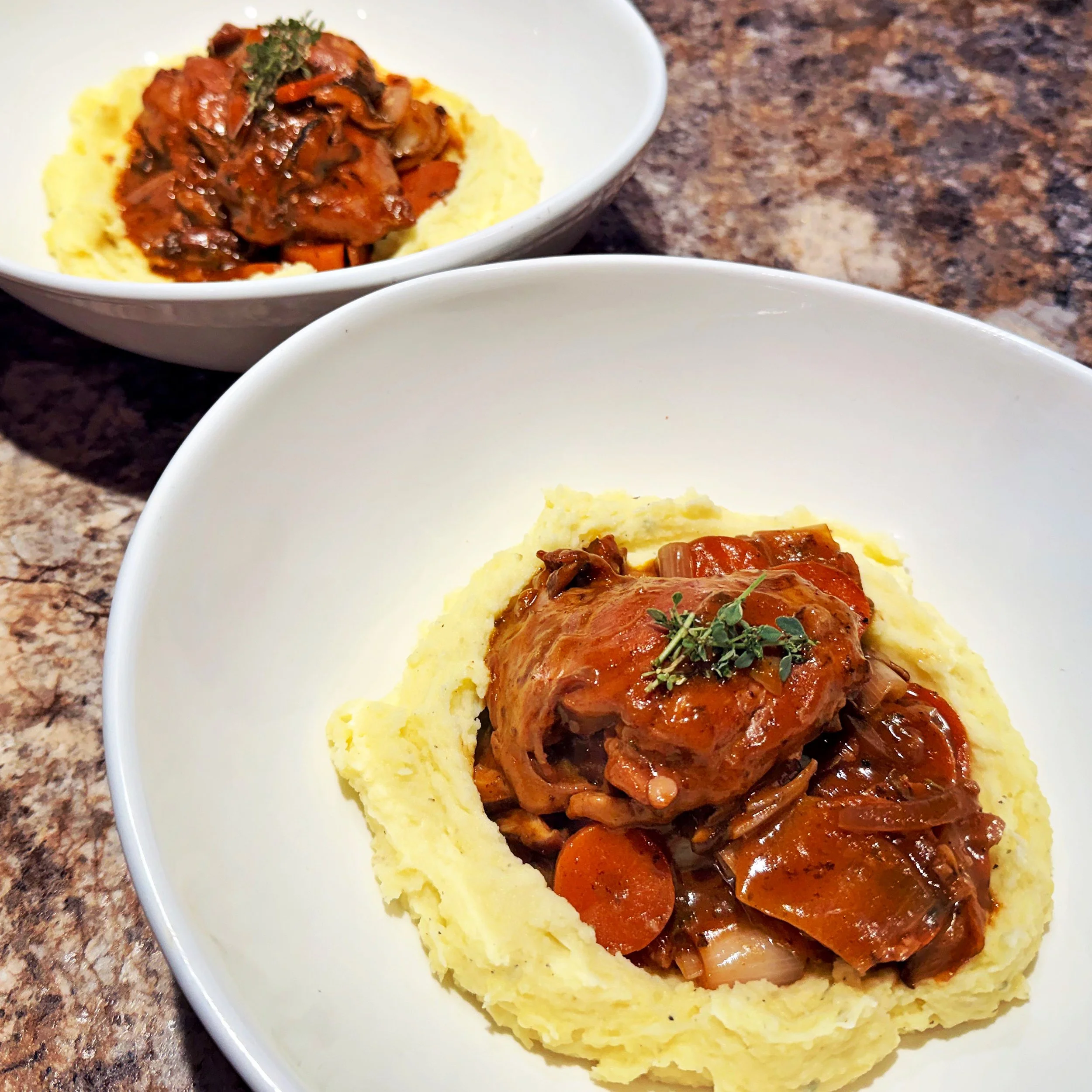
Wine, bacon, and butter — say less, eat more.
For years I was convinced I didn’t like coq au vin, but it turns out I just didn’t like bad coq au vin. I finally gave French chicken stew another chance when I saw it featured at a favourite restaurant and it was simply fantastic. Rustic, comforting, and deeply flavourful. Better yet, once I dug into the recipe, I also realized it’s far easier to make than you think.
A couple of items to note: although not necessary, I highly recommend using a fresh chicken and doing a 5% brine soak for 4 to 6 hours as it takes the tenderness of the chicken to the next level. Next up, I substituted shallots for pearl onions because those little gems aren’t always readily available (although I’ll happily use pearl onions when I can get them). And lastly, I honoured the traditional Pinot Noir for the wine selection, but a Gamay or Cote de Rhone is also considered a good choice. Just remember, if you wouldn’t drink it, don’t cook with it.
The whole meal comes together in about 45-60 min, and while the recipe maximizes time by cooking the pearl onions and mushrooms while the chicken simmers, you can also do this step at the start and just set aside. My final suggestion is to serve the stew on top of creamy mashed potatoes or with a fresh loaf of crusty bread. Conveniently, you’ve already selected a great wine to pair with your dinner, so enjoy.—CFG
Ingredients:
For the Brine
8 cups cold water
5-6tbsp kosher salt
Lemon peel of one lemon
1tbsp peppercorn
3-4 cloves of garlic smashed, no need to peel
For the Coq au Vin
6 chicken thighs with leg attached -OR- 1 full chicken sectioned into pieces
1/2 cup all-purpose flour
1 2/3 cups Pinot Noir
1 1/3 cups chicken stock
1 cup thick-cut bacon or pancetta, chopped into small pieces
1 tsp sea salt
1 tsp black pepper
2 shallots, thinly sliced
3 medium carrots, peeled and cut into ½ - 1” chunks
4 cloves garlic, minced
2 tsp fresh thyme leaves
8 oz shiitake or brown mushrooms, thickly sliced
6–8 small shallots, peeled and halved -OR- a large handful (~15) of peeled pearl onions
Beurre manié: 1 tbsp butter + 1 tbsp flour, mixed together
2 tsp red wine vinegar
1 tbsp cold butter (optional finishing step)
Directions:
Place the brine ingredients (8cups of water, 5-6 tbsp kosher salt, 1 tbsp peppercorns, the peel of one lemon) in a large sized pot and warm on medium-low heat just until the salt is dissolved. Remove from heat and allow to cool.
Place the chicken pieces in a Dutch oven and pour the cooled brine so it completely covers the meat. Cover with a lid and store in the fridge for 4-6 hours.
Once you’re ready to start the meal, drain the brine off, then rinse the chicken in cold water.
Pat the chicken dry with paper towel and season on both sides with 1 tsp each of coarsely ground sea salt and freshly ground pepper.
Dredge the chicken in flour and shake off all the excess. Set aside.
Next, chop 1 cup of thick-cut bacon into small pieces and cook in a brasier pan over medium heat until crisp. (You’ll have ~2/3 cup cooked bacon when finished.)
Remove the meat with a slotted spoon and set aside, leaving the fat in the pan.
Transfer the seasoned and floured chicken into the brasier and use the bacon fat to brown it over medium heat on both sides until deep golden brown (~15-18 minutes total). (Note: if you don’t have much bacon grease, you can add 1-2 tbsps of butter.)The chicken won’t be cooked through, but will appear crisp on outside. Remove from heat and set aside.
Using the same bacon fat, add the 1/2 medium onion, quartered then thinly sliced (or 2 shallots sliced) and 3 medium carrots cut and peeled and cut into ½ - 1” chunks to the brasier and cook on medium heat until a light crust forms (~4-6min).
Next, add in 4 cloves of minced garlic and 2 tsp of fresh thyme leaves. Cook for 1-2min until the mixture is fragrant and slightly darkened.
To deglaze and reduce the mixture, pour in 1 2/3 cups Pinot Noir, scraping up the browned bits from the bottom. Bring the mixture to a soft boil and continue cooking to reduce the liquid for ~5min.
Begin the braise by adding 1 1/3 cups of chicken stock and then return the chicken to the pan. (The liquid should cover a little more than half of the chicken.)
Place a trimmed piece of parchment paper the size of the braiser over the chicken, then simmer partially covered for ~30min.
While the chicken simmers, thickly slice 8oz of shiitake/brown mushrooms. Next, peel 6-8 small shallots and slice in half. (If using pearl onions, peel off the outside skin and leave whole.) Set aside.
In a separate pan (I prefer cast iron), melt a little butter on medium-high heat, then add the mushrooms and move around the pan until they’re fully coated in the melted butter. Add in the shallot halves/ pearl onions and continue cooking undisturbed until browned and most moisture has evaporated, (~8-10min). Remove from heat.
Add the mushrooms, shallots, and half of the cooked bacon back to the brasier and continue cooking partially covered. (You should be incorporating the mushrooms and shallots/onions when you have about 15min left in the braise).
While the mixture simmers, create a beurre manié by mixing together 1 tbsp of butter and 1 tbsp of flour in a small bowl.
Remove the braiser lid and add the beurre manié and remaining cooked bacon, gently stir and simmer a few minutes more to slightly thicken the sauce. (You want a thickened liquid consistency, but not a full gravy.)
To finish, add 2tsp of red wine vinegar to the dish, and (optionally) 1tbsp of cold butter to add shine.
Plate with a bed of mashed potatoes and spoon generous amounts of sauce and vegetables on top.
Serve and enjoy!
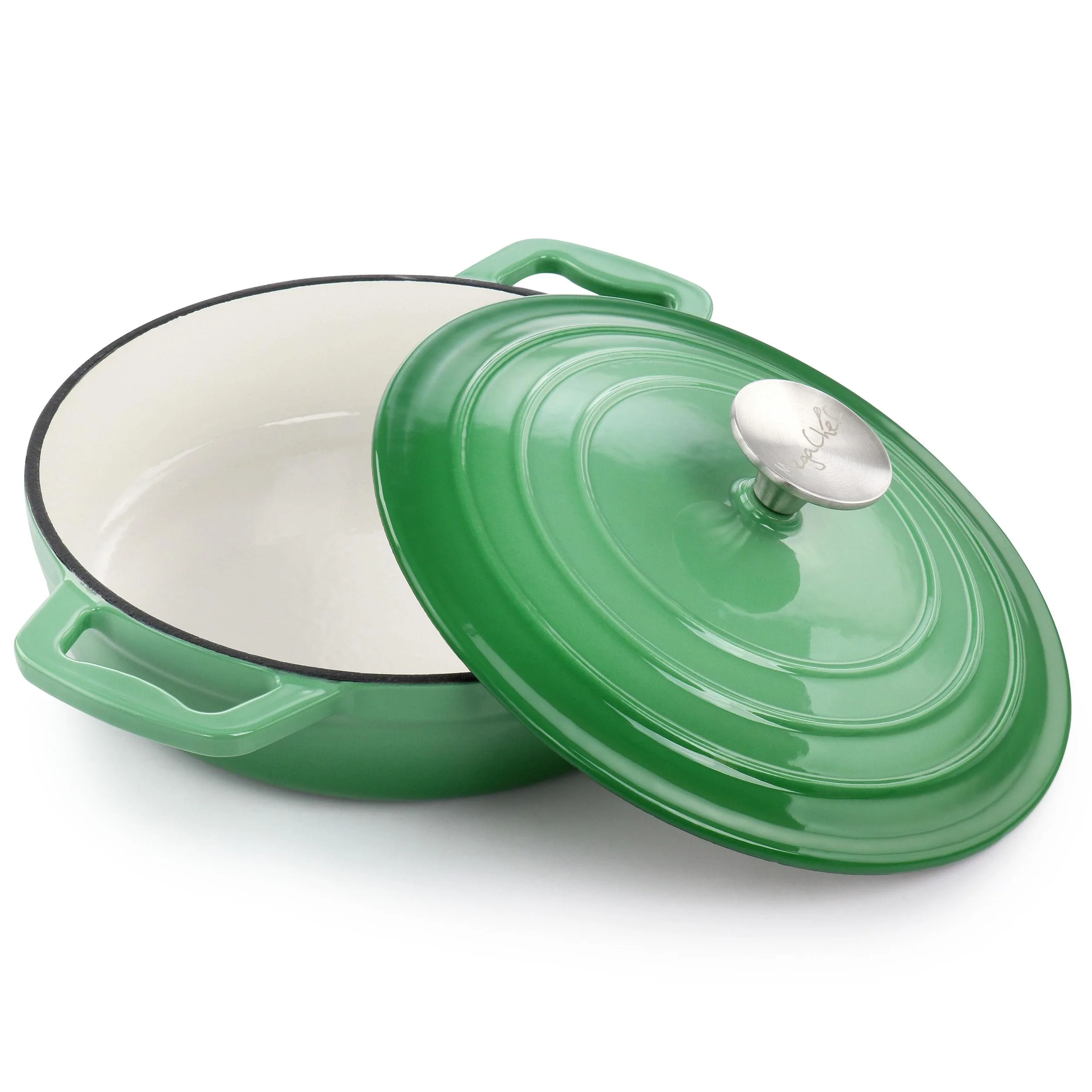
A note on brasiers:
A brasier is wide, shallow pan with a heavy, tight-fitting domed lid and two side handles. It’s designed to combine the browning capabilities of a skillet with the moisture-retaining properties of a Dutch oven, making it ideal for the "low and slow" cooking technique known as braising.